The printf-funtion in kernels isn’t the solution to everything, so hence profilers and debuggers specially tailored for GPU-programming. On Windows there is a lot of choice, but mostly only if you have a paid version of Visual Studio. On Linux you have GDB, but that program is not really user-friendly for the GUI-lovers.
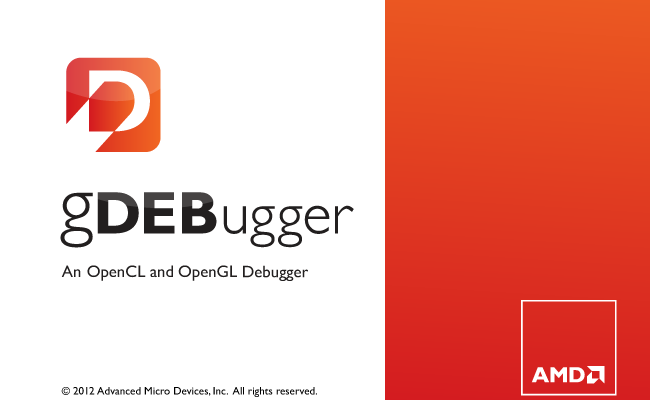
For AMD there is now gDEBugger again available for Linux. Again, as version 5.8 by Gremedy worked with Linux, after AMD bought the company it got Windows-only for version 6. A few weeks ago, 10 months after 6.0, Linux-binaries got back with version 6.2. It supports OpenCL 1.2, OpenGL 3.2 and quite some extensions. As only AMD is supported, later more on debugging OpenCL-applications on NVidia and Intel.
Installation is quite straightforward. For creating a menu-item, you’ll find an useful image in /opt/gDEBugger6.2.xxx/tutorial/images/.
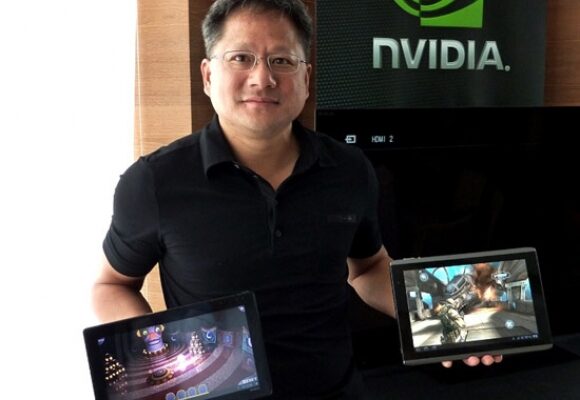
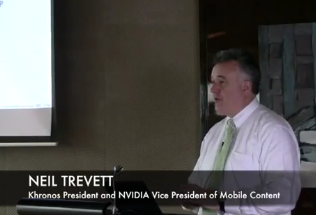
 If you want to see what is coming up in the market of consumer-technology (PC, mobile and tablet), then NVIDIA can tell you the most. The company is very flexible, and shows time after time it really knows in which markets is currently operates and can enter. I sometimes strongly disagree with their marketing, but watch them closely as they are in the most important markets to define the near future in: PCs, Mobile/Tablet and HPC.


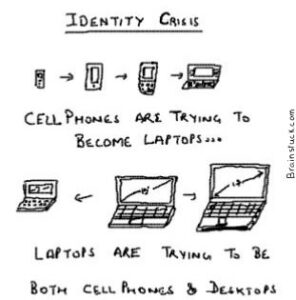


 Say you have a device which is extremely good in numerical trigoniometrics (including integrals, transformations, etc to support mainly Fourier transforms) by using massive parallelism. You also have an optimised library which takes care of the transfer to the device and the handling of trigoniometric math.



 With the launch of twitter-channel
 There is a lot going on at the path to GPGPU 2.0 – the libraries on top of OpenCL and/or CUDA. Among many solutions we see for example Microsoft with C++ AMP on top of DirectCompute, NVidia (and more) with OpenACC, and now
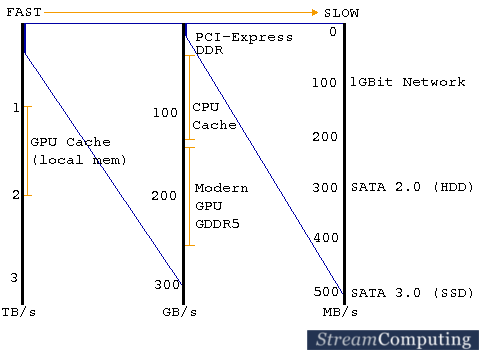
 We zoom into the slower bus-speeds. So all the good stuff is at the left and all buses to avoid are on the right. What should be clear is that a read from or write to a SSD will make the software very slow if you use write-trough instead of write-back.

 Does your computer have OpenCL-capable hardware? Read on and find out if your computer is compatible…


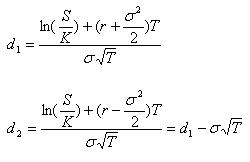
 Intel, AMD and NVidia have all written implementations of the Black-Scholes algorithm for their devices. Intel has described a kernels in their

 HTML5 has the future, now Flash and Silverlight are abandoning the market to make the way free for HTML5-video. There is one big problem and that is that it is hard to protect the content – before you know the movie is on the free market. DRM is only a temporary solution and many times ends in user-frustration who just want to see the movie wherever they want.


 Typos are a programmers worst nightmare, as they are bad for concentration. The code in your head is not the same as the code on the screen and therefore doesn’t have much to do with the actual problem solving. Code highlighting in the IDE helps, but better is to use the actual OpenCL compiler without running your whole software: an Online OpenCL Compiler. In short is just an OpenCL-program with a variable kernel as input, and thus uses the compilers of Intel, AMD, NVidia or whatever you have installed to try to compile the source. I have found two solutions, which both have to be built from source – so a C-compiler is needed.



 In the series