 After IBM-compatible clones took over from Apple, Atari and ZX Spectrum, we just got used to that a PC is an X86 with MS Windows and Office on it. Around a decade ago Apple fought back with OSX on which Windows 7 (launched in 2009) was the first real answer. Meanwhile Apple switched to Intel, since IBM was not fast enough with the development of the POWER-processor – a huge operation, which seemed a one-time-only step for Apple at the time. SemiAccurate now speaks of Intel being replaced by ARM on Apple’s laptops.
A few weeks ago I asked Computer Science students if they knew ARM. Not even 1% had heard of it, but lots more knew there was a Samsung-chip in their smartphone. So what’s going on without us knowing it?
I’ll try to describe the market for a few key-years and then try to put the big names in it. There is a lot going on between i.e. Nvidia, Samsung, Texas Instruments and Imagination Technologies in the ARM-market, but I’ll leave that out of the story. Also not mentioned are the game-consoles and servers, but they did have big influences on the home-PC market.
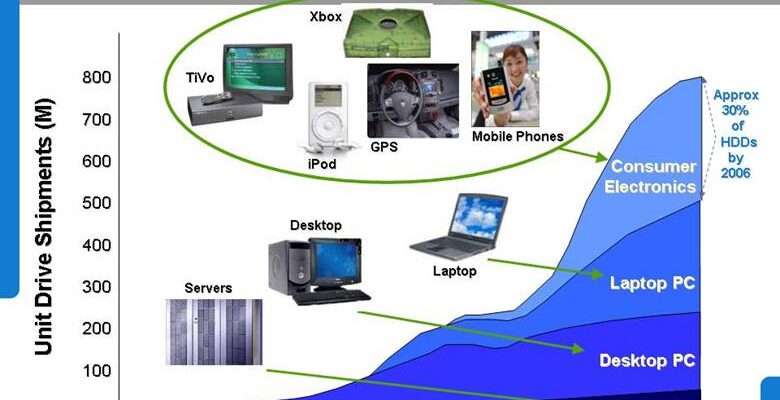
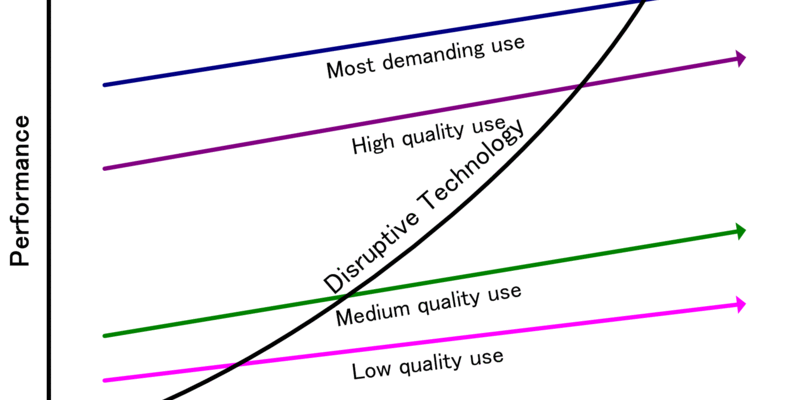
In the picture at the right you see an idea of how fast the markets would have grown from a 2006 perspective. (Click on it for the full report). You see that the explosive growth of smartphones was not expected; the other detail is that the cloud also was not foreseen here.
After reading you understand why Nvidia focuses so much on HPC and mobile.
After IBM-compatible clones took over from Apple, Atari and ZX Spectrum, we just got used to that a PC is an X86 with MS Windows and Office on it. Around a decade ago Apple fought back with OSX on which Windows 7 (launched in 2009) was the first real answer. Meanwhile Apple switched to Intel, since IBM was not fast enough with the development of the POWER-processor – a huge operation, which seemed a one-time-only step for Apple at the time. SemiAccurate now speaks of Intel being replaced by ARM on Apple’s laptops.
A few weeks ago I asked Computer Science students if they knew ARM. Not even 1% had heard of it, but lots more knew there was a Samsung-chip in their smartphone. So what’s going on without us knowing it?
I’ll try to describe the market for a few key-years and then try to put the big names in it. There is a lot going on between i.e. Nvidia, Samsung, Texas Instruments and Imagination Technologies in the ARM-market, but I’ll leave that out of the story. Also not mentioned are the game-consoles and servers, but they did have big influences on the home-PC market.
In the picture at the right you see an idea of how fast the markets would have grown from a 2006 perspective. (Click on it for the full report). You see that the explosive growth of smartphones was not expected; the other detail is that the cloud also was not foreseen here.
After reading you understand why Nvidia focuses so much on HPC and mobile.


 My todo-list gets too large, because there seem so many things going on in GPGPU-world. Therefore the following article is not really complete, but I hope it gives you an idea of the product.



 About 5 months ago we started


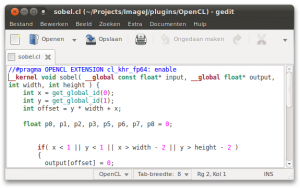 Update 17-06-2011: updated version of
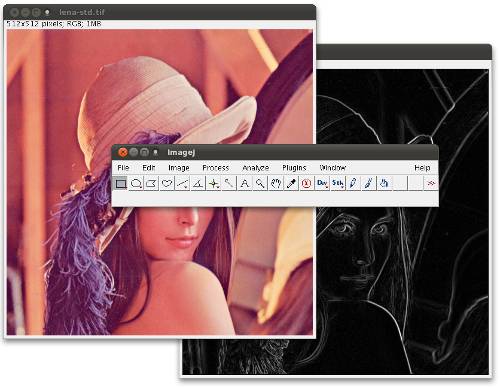
 The Wine 1.3 branch has support for OpenCL 1.0 since
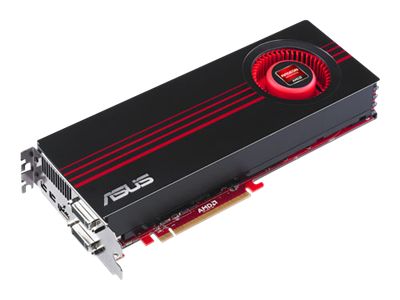
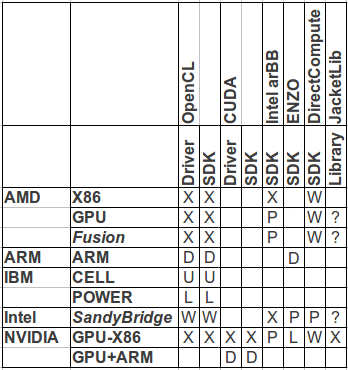
 Developing with OpenCL is fun, if you like debugging. Having software with support for OpenCL is even more fun, because no debugging is needed. But what would be a good machine? Below is an overview of what kind of hardware you have to think about; it is not in-depth, but gives you enough information to make a decision in your local or online computer store.

 So you want OpenCL-benchmarks?