
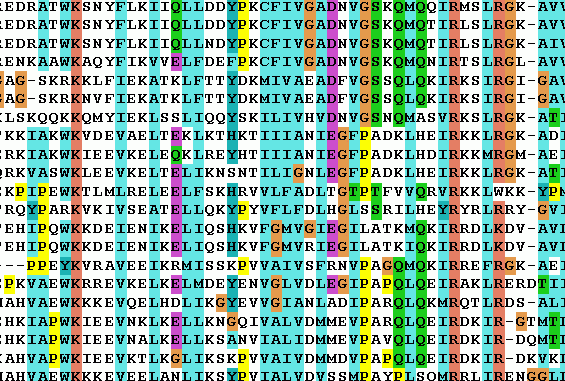
Last year we accelerated the OpenCL-code in PaSWAS, which is open source software to do DNA/RNA/protein sequence alignment and trimming. It has users world-wide in universities, research groups and industry.
Below you’ll find the benchmark results of our acceleration work. You can also test out yourself, as the code is public. In the readme-file you can learn more about the idea of the software. Lots of background information is described in these two papers:
- Flexible, Fast and Accurate Sequence Alignment Profiling on GPGPU with PaSWAS
- pyPaSWAS: Python-based multi-core CPU and GPU sequence alignment
We chose PaSWAS because we really like bio-informatics and computational chemistry – the science is interesting, the problems are complex and the potential GPU-speedup is real. Other examples of such software we worked on are GROMACS and TeraChem.
Continue reading “We accelerated the OpenCL backend of pyPaSWAS sequence aligner”



 Answer: Yes, actually a lot!

 This series “
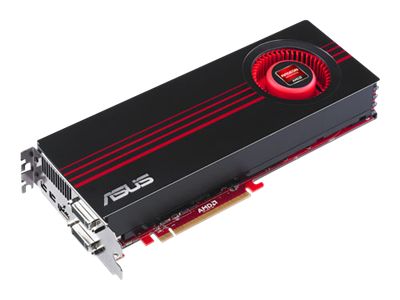
 GPUs have been our mysterious friends and known enemies for years, as they let us run code in expected and unexpected ways. GPUs have solved problems for many of our customers. GPUs have such a high rate of evolvement, that they’ll remain important for the years to come.
 Our managing director,



 As of this month Stream exists 8 years. 8 full years of helping our customers with fast software.In Chinese numerology 8 is a very lucky number, and we notice that.

 Ever saw a claim on a paper you disagreed with or got triggered by, and then wanted to reproduce the experiment? Good luck finding the code and the data used in the experiments.
 When CUDA kept having a dominance over OpenCL, AMD introduced HIP – a programming language that closely resembles CUDA. Now it doesn’t take months to port code to AMD hardware, but more and more CUDA-software converts to HIP without problems. The real large and complex code-bases only take a few weeks max, where we found that solved problems also made the CUDA-code run faster.


