
 Guest-blogger Jaap van de Loosdrecht wants to share his thesis with you. He leads the Centre of Expertise in Computer Vision department at NHL University of applied sciences and is the owner of his own company, and still managed to study and write a MSc-thesis. The thesis is interesting because it extensively compares OpenCL with OpenMP, especially chapters 7 an 8.
For those who are interested, my thesis “Acceleration sequential machine vision algorithms using commodity parallel hardware” is available at www.vdlmv.nl/thesis.
Keywords: Computer Vision, Image processing, Parallel programming, Multi-core CPU, GPU, C++, OpenMP, OpenCL.
Many other related research projects have considered using one domain specific algorithm to compare the best sequential implementation with the best parallel implementation on a specific hardware platform. This work was distinctive because it investigated how to speed up a whole library by parallelizing the algorithms in an economical way and execute them on multiple platforms.This work has:
- Examined, compared and evaluated 22 programming languages and environments for parallel computing on multi-core CPUs and GPUs.
- Chosen to use OpenMP as the standard for multi-core CPU programming and OpenCL for GPU programming.
- Re-implemented a number of standard and well-known algorithms in Computer Vision using both standards.
- Tested the performance of the implemented parallel algorithms and compared the performance to the sequential implementations of the commercially available software package VisionLab.
- Evaluated the test results with a view to assessing:
- Appropriateness of multi-core CPU and GPU architectures in Computer Vision.
- Benefits and costs of parallel approaches to implementation of Computer Vision algorithms.
Using OpenMP it was demonstrated that many algorithms of a library could be parallelized in an economical way and that adequate speedups were achieved on two multi-core CPU platforms. With a considerable amount of extra effort, OpenCL was used to achieve much higher speedups for specific algorithms on dedicated GPUs.
At the end of the project, the choice of standards was re-evaluated including newly emerged ones. Recommendations are given for using standards in the future, and for future research and development.
Algorithmic improvements are suggested for Convolution and Connect Component Labelling.
Your feedback and/or questions are welcome.
If you put comments here, I’ll make sure Jaap van de Loosdrecht will get to know and answer your questions on the subjects discussed in his thesis.


 Something that creates extra value for Open CL is the flexibility with which it runs on an important variety of hardware. A famous strategy is running the code on CPUs to find data-races and debug the code more easily. Another is to develop on GPUs and port to FPGAs to reduce the development-cycles.
 The past year you might not have heard much from OpenCL-on-ARM, besides the Arndale developer-board. You have heard just a small portion of what has been going on.




 There is an interesting book coming up: “Numerical Computations with GPUs” – a book explaining various numerical algorithms with code in CUDA or OpenCL.

 For your convenience: an overview of all ARM-GPUs and their driver-availability. Please let me know if something is missing.

 Update: we are very sorry to tell that due to a deadline in a project we were forced to cancel Vincent’s talk.


 AMD has just released an update to their AMD programming guide.
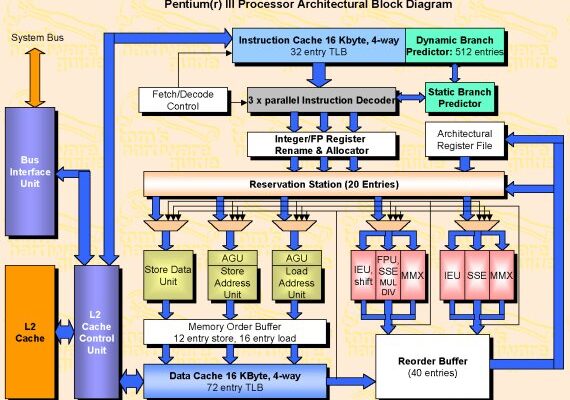
 UPDATED in February 2017

 Important: this is only for Google-branded Nexus phones – other brands are free to do what they want, and they most-probably will.


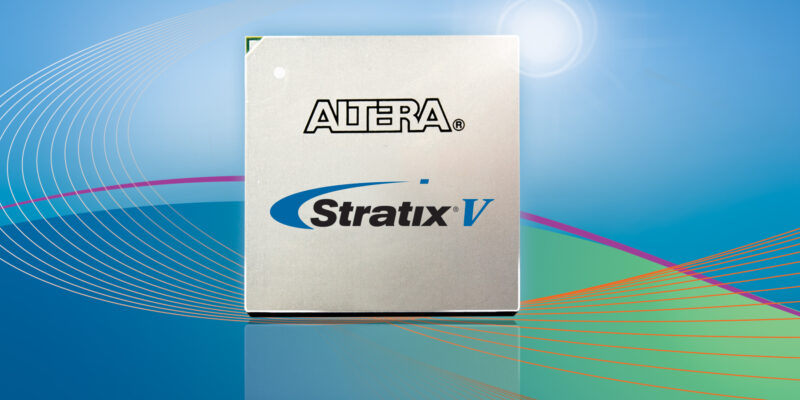
 Altera has been very busy adding resources and has kicked off the beginning of June with opening up their OpenCL-program for the general public.

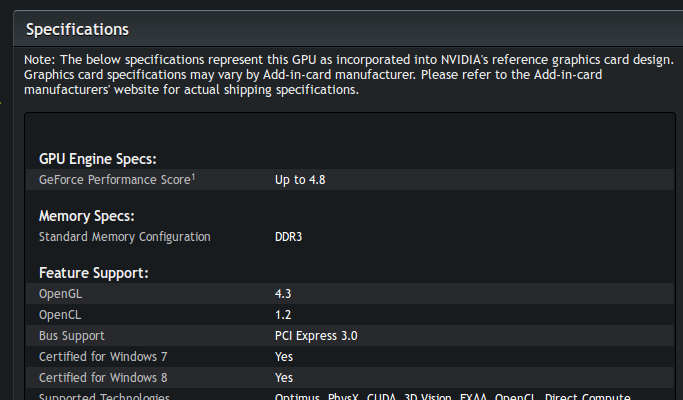
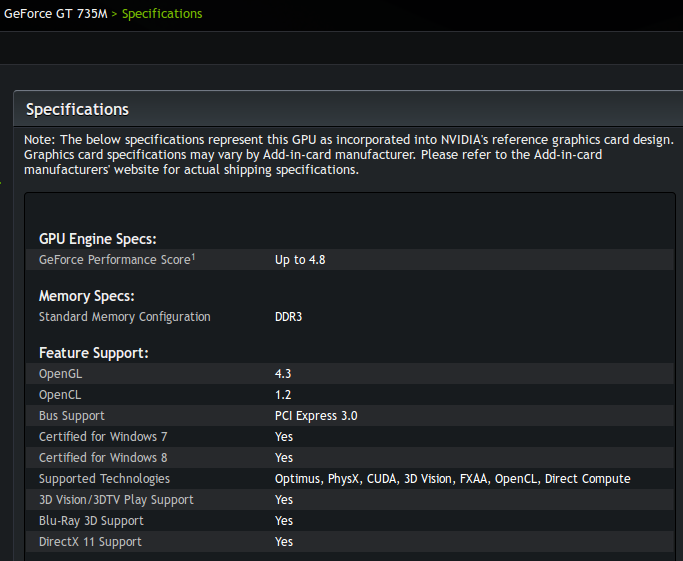
 Update September ’13: AMD gets their new GPUs “
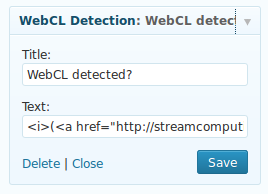
 See the widget at the right showing if your browser+computer supports WebCL?