
 On 15 – 17 April 2014 a 3-day workshop around HPC is organised. It is free, and focuses on bringing industry and academy together.
Research Institute for Symbolic Computation (RISC) / Johannes Kepler University Linz Kirchenplatz 5b (Castle of Hagenberg) 4232 Hagenberg Austria
The PRACE Spring School 2014 will take place on 15 – 17 April 2014 at the Castle of Hagenberg in Austria. The PRACE Seasonal School event is hosted and organised jointly by the Research Institute for Symbolic Computation / Johannes Kepler University Linz (Austria), IT4Innovations / VSB-Technical University of Ostrava (Czech Republic) and PRACE.
The 3-day program includes:
- A 1-day HPC usage for Industry track bringing together researchers and attendees from industry and academia to discuss the variety of applications of HPC in Europe.
- Two 2-day tracks on software engineering practices for parallel & emerging computing architectures and deep insight into solving multiphysical problems with Elmer on large-scale HPC resources with lecturers from industry and PRACE members.
The PRACE Spring School 2014 programme offers a unique opportunity to bring users, developers and industry together to learn more about efficient software development for HPC research infrastructures. The program is free of charge (not including travel and accommodations).
Applications are open to researchers, academics and industrial researchers residing in PRACE member countries, and European Union Member States and Associated Countries. All lectures and training sessions will be in English.
Applications are open to researchers, academics and industrial researchers residing in PRACE member countries, and European Union Member States and Associated Countries. All lectures and training sessions will be in English. Please visit http://prace-ri.eu/PRACE-Spring-School-2014/ for more details and registration.
At StreamHPC we support such initiatives.










 According to the






 DigitalFilmTools

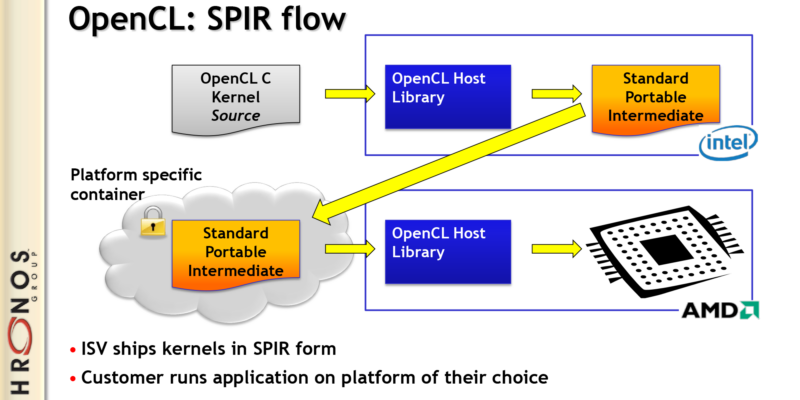
 OpenCL SPIR (Standard Portable Intermediate Representation) is an intermediate representation for OpenCL-code, comparable to LLVM IL and HSAIL. It is a search for what would be a good representation, such that parallel software runs well on all kinds of accelerators. LLVM IL is too general, but SPIR is a subset of it. I’ll discuss HSAIL, on where it differs from SPIR – I thought SPIR was a better way to start introducing these. In my next article I’d like to give you an overview of the whole ecosphere around OpenCL (including SPIR and HSAIL), to give you an understanding what it all means and where we’re going to, and why.


 Khronos has supported and organised for the second time the






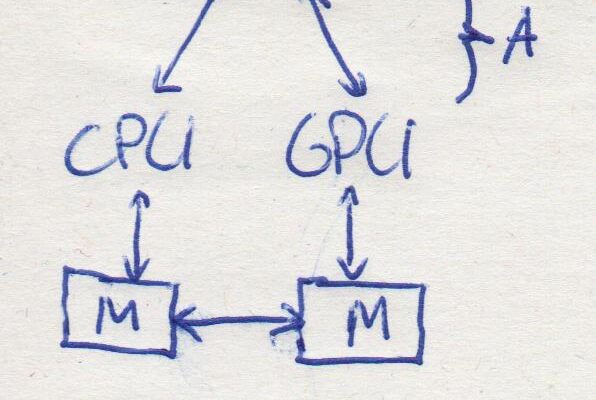

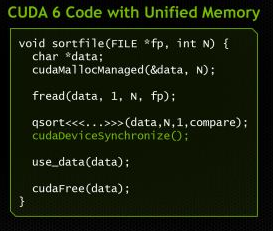
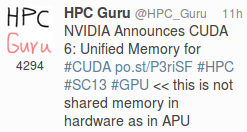 See the difference?

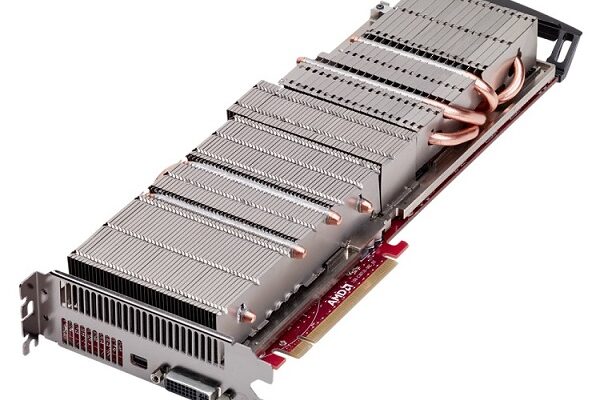
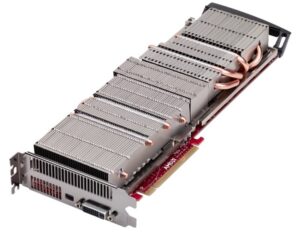 Let the competition on large memory GPUs begin!